If you're missing a tooth and wondering whether implants are even an option for you, the answer for most adults is yes. Cost, timing, bone loss, and overall health are all part of the conversation, and this page walks through each one honestly so you know where you stand before your first appointment.
Dr. Pappas and the team at Walnut Creek Dental East wrote this guide for patients in Groveport and across central Ohio who are weighing implants against bridges or dentures, wondering what the process actually involves, or trying to understand what things cost and what insurance covers.
If you'd rather talk it through with a real person, call us at (614) 864-2466 or request an appointment online.
Adults lose teeth for ordinary reasons, and almost never for reasons worth feeling ashamed about. Common causes include decay that got past a filling and reached the nerve, gum disease that loosened the bone holding a tooth in place, a cracked molar, a fall, or an infected tooth that had to come out. Very often, it's a stretch of years where life got in the way and a small problem became a big one. What surprises most people is that the gap doesn't just sit there quietly. Your mouth starts adjusting around the empty space right away.
None of this is meant to scare anyone. It just explains why a missing tooth has a timeline attached. Replacing it sooner usually means fewer steps, less bone rebuilding, and more options on the table.
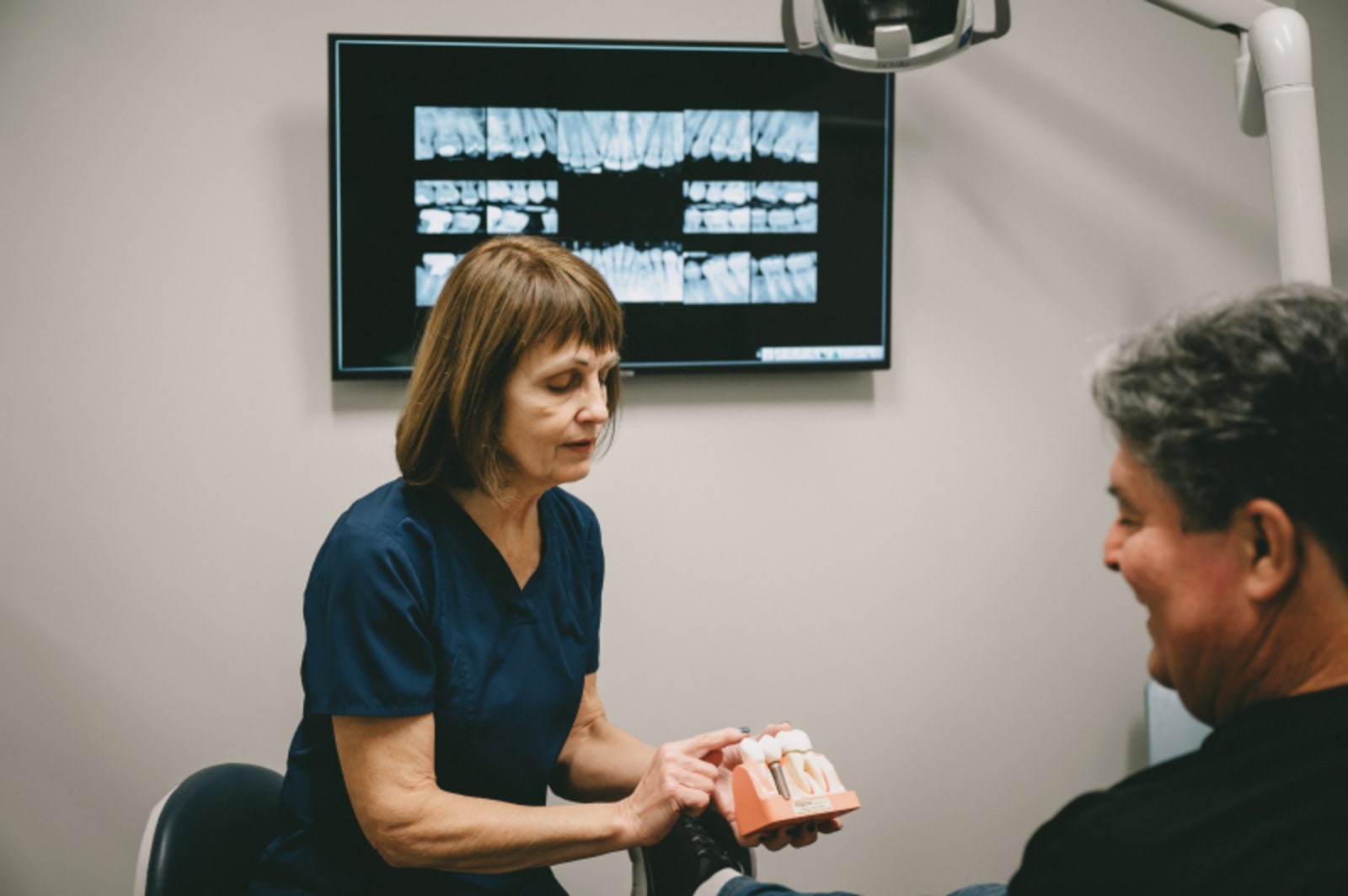
We start with X-rays, and often 3D imaging for implant planning. That lets us measure the height and width of bone at the site and see exactly where the nerve and sinus are. An implant post needs enough bone surrounding it on all sides. If the bone is thin or shallow, that doesn't mean no. It usually just means grafting comes first.
Gums need to be free of active infection before anything goes into the bone. If there's bleeding, deep gum pockets, or tartar below the gumline, we treat that first. Implants can develop their own version of gum disease, so starting from a healthy baseline really matters. A routine cleaning and exam is often the right place to begin.
Smoking restricts blood flow to healing tissue and noticeably raises the chance an implant won't bond properly. It doesn't rule you out, but it does mean we'll talk about cutting back or quitting around the surgery window. We'll have that conversation without any judgment.
Well-controlled diabetes is generally fine. Uncontrolled diabetes slows healing and raises infection risk, so we'd want it stabilized first. The same thinking applies to other health conditions. Medications matter too. Certain bone medications, long-term steroids, blood thinners, and some cancer treatments can affect the plan, which is why we ask for a complete list rather than a general idea.
Implants are placed in jaws that have finished growing. For teens, that usually means waiting and using a temporary replacement in the meantime, since an implant stays fixed while a growing jaw keeps shifting around it.
Implants don't get cavities, but they can fail from neglect. Brushing, flossing or using a water flosser, and keeping regular checkups are what keep them healthy long term. If daily care has been a challenge, we'd rather build a realistic plan together than set you up for a problem down the road.
If gum disease is active, treating it comes first. That usually means a deep cleaning below the gumline to clear out tartar and bacteria, then a follow-up check a few weeks later. More advanced cases may need several visits and a more frequent cleaning schedule going forward.
When a tooth can't be saved, it comes out first. If an implant is already part of the plan, we can often place graft material into the empty socket the same day, which is called socket preservation. It holds the shape of the ridge while it heals, so there's more bone to work with later. Our team handles tooth extractions right here in Groveport, so you're not sent somewhere else mid-treatment.
Think of the graft material as a scaffold. It holds space and gives your own bone cells something to grow around and through as the area fills in. Over time, graft material may dissolve or stay partly embedded, but either way, you'll have enough volume at the site to hold an implant securely. Healing time depends on the size of the graft, but a few months before placement is typical.
Upper back teeth sit close to the sinus cavity, and when those teeth have been missing a while, the sinus floor can drop lower. A sinus lift gently raises the sinus lining and places graft material underneath to build enough height for an implant. It sounds more complicated than it is. For upper molar sites, it's a routine, well-established step.
The multi-appointment timeline is what makes most people hesitate. Here's the whole picture so you know exactly what to expect.
We do an exam, take X-rays or 3D images, review your health history, and talk about what you want the end result to look and feel like. You leave with a clear plan and an itemized estimate, not a vague number. One visit, usually about an hour.
Gum treatment, an extraction, socket preservation, bone grafting, or a sinus lift if the site needs it. This stage varies the most: sometimes none at all, sometimes several months of healing before the next step. Everything is handled here in our Groveport office, so you won't be sent to a separate specialist mid-treatment.
A small titanium post is placed into the jawbone where your tooth root used to be. The area is numbed thoroughly, and sedation is available if you'd like it. The appointment is often shorter than people expect, roughly an hour for a single implant.
This is the waiting stage. Over the next three to six months, your bone slowly grows around the post and holds it firmly in place, just like it does with a natural tooth root. Most people barely notice it after the first week. A temporary tooth can usually fill the space in the meantime.
Once the post is fully healed and stable, a small connector piece called an abutment is attached to the top of it. Sometimes this happens at the same appointment as placement. Other times it's a brief separate visit, with a couple of weeks for the gum tissue to settle around it.
We take impressions or a digital scan and send them to the lab, where your custom crown, bridge, or implant-retained denture is made to match your bite and your other teeth. Once it's attached and the fit is confirmed, you're done. Usually two to three weeks between the scan and the final appointment.
Some swelling, tenderness, and maybe a little bruising is completely normal. Swelling tends to peak around day two and then eases off. Icing on and off through the first day helps keep it down. Most people get through the discomfort with over-the-counter pain relievers, though stronger medication is available when the situation calls for it. Plan on resting, skipping the gym, and keeping your head slightly elevated when you sleep.
Stick to soft, lukewarm foods for the first several days: eggs, yogurt, soup that isn't piping hot, mashed potatoes, smoothies. Skip straws after an extraction or graft, since the suction can disturb the clot and cause a dry socket. Chew on the other side and ease back toward your normal diet as things feel ready, usually over one to two weeks.
Take it easy around the surgical area at first. Avoid brushing directly on it, rinse with warm salt water starting the day after, and keep brushing the rest of your mouth as usual. We'll send you home with written instructions so you don't have to remember everything on your own.
We'll check in within a week or two to make sure things are healing well, then keep an eye on progress through the months while the implant bonds to the bone. These are quick visits, and they're how small issues get caught before they become bigger ones.
If any of these come up, don't wait it out. Our team would much rather hear from you early and put your mind at ease.
These three options get compared constantly, usually with implants framed as the "good" one and dentures as the consolation prize. That framing isn't fair. Each one genuinely fits certain situations better than the others.
Sometimes the obstacle isn't bone density or budget. It's the idea of sitting in a dental chair after five, ten, or thirty years away and bracing for a lecture. You won't get one here. Our team has seen it all, and the response is always a plan, not a judgment.
We go slow. The first appointment is about getting to know you and your history, taking digital X-rays and intraoral photos so you can see exactly what we see, and talking through what's urgent versus what can wait. Nothing happens that you haven't agreed to. If a full cleaning feels like too much for a first visit, we can split it up. If you need to stop partway through for a breather, just say so and we stop.
We offer two kinds of sedation for patients who need extra support. Oral conscious sedation means you take a pill before your appointment that leaves you relaxed and drowsy but still able to respond. IV sedation goes deeper and works well for longer procedures like implant placement or multiple extractions. Many people remember very little of the appointment afterward. Because exams, extractions, gum treatment, implants, and sedation all happen right here in Groveport, you won't be sent to three different offices to get it done.
Implants need brushing twice a day and flossing between teeth. A water flosser is often easier to use around implant crowns than string floss. Bridges need a floss threader or water flosser to clean underneath. Dentures come out nightly for cleaning and soaking, and the gums underneath need a gentle brushing too. Once chewing feels comfortable again, the foods that quietly dropped off your plate, things like raw vegetables, nuts, and lean meats, tend to find their way back. Regular checkups catch the small stuff: early gum irritation around an implant, a denture that's starting to shift, a bridge collecting plaque at the edge.
Gum disease is the most common reason adults lose teeth, and it's also the biggest threat to implants once they're placed. Irritation around an implant behaves a lot like gum disease around a natural tooth and can wear away the bone supporting it. Keeping up with cleanings isn't just a formality. It's what keeps everything stable long term.
Gum inflammation can make blood sugar harder to manage, and high blood sugar makes gum disease worse and slows healing. Research has also linked ongoing gum inflammation to heart disease. Your mouth is connected to the rest of you, and our team treats it that way.
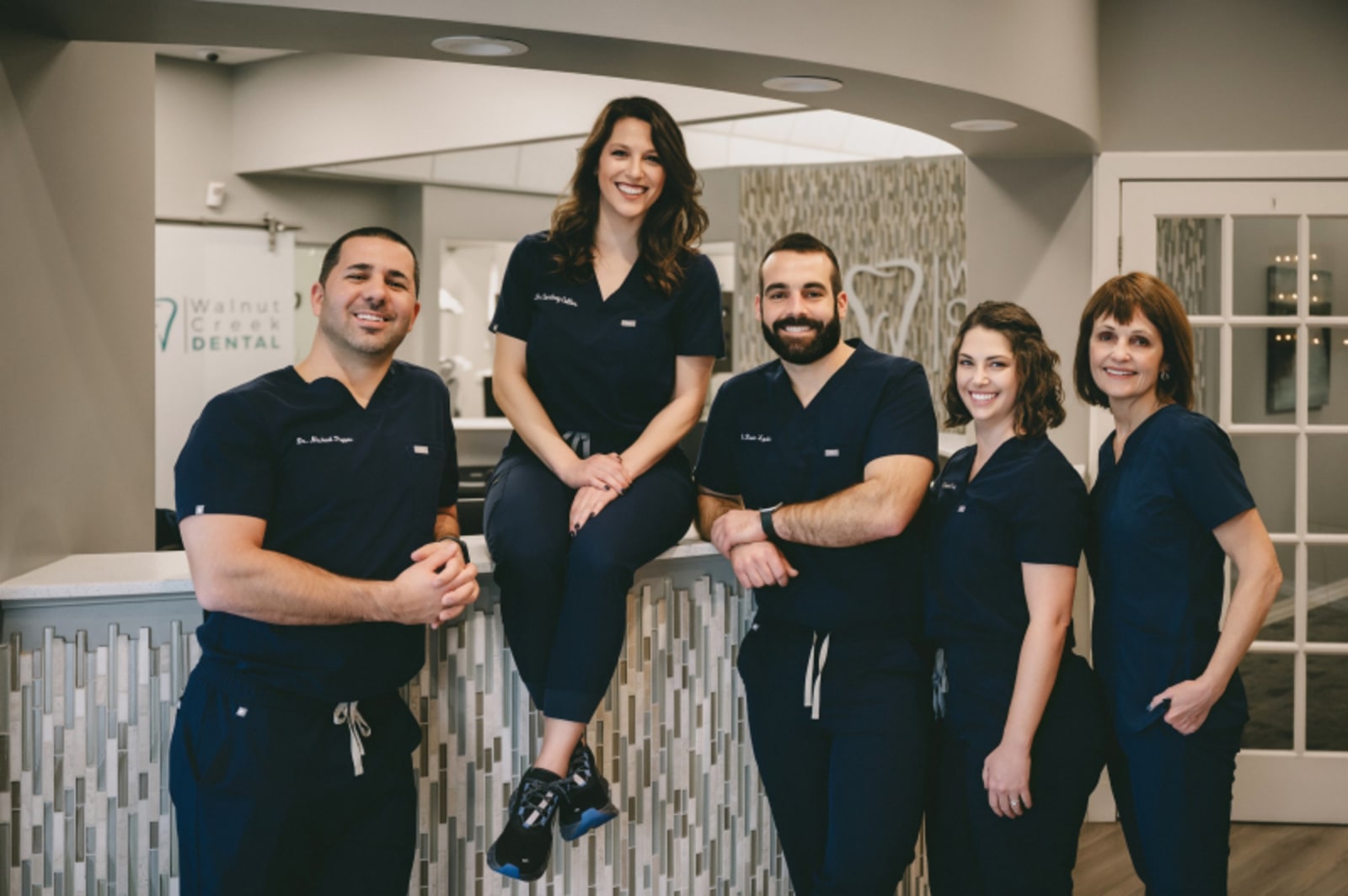
You don't need to have everything figured out financially before you walk in. One consultation gives you a real answer about your bone, your gums, your timeline, and your cost. All in writing, after a single visit.
It helps to bring a few things along:
Dr. Pappas and the team at Walnut Creek Dental East welcome patients from Groveport and across central Ohio. We're especially happy to see people who have been away from the dentist for a long time. Whether you're considering dental implants, a bridge, or dentures, we'll walk you through it together. Call us at (614) 864-2466 or request an appointment online. We'll be in touch soon.
Call 614-864-2466 or request an appointment online to set up your first visit. We’ll be in touch soon.