If you wake up with a sore jaw, a dull headache, or teeth that look shorter than they used to, there's a good chance you're grinding your teeth in your sleep. It's called bruxism, and most people don't realize it's happening until a partner mentions the noise or a hygienist spots the wear at a routine cleaning. The good news: it's very treatable.
At Walnut Creek Dental East in Groveport, OH, our team of doctors and our team take bruxism seriously and treat it with a clear plan, not just a drugstore tray. Below, you'll find the symptoms to watch for, what a custom night guard actually does, and what to expect when you come in.
Give us a call at (614) 864-2466 and we'll get you in.
Here is what the process looks like, from your first phone call to a guard that actually fits your bite.
You'll walk us through what's been going on: morning soreness, headaches, the sounds your partner hears, how you've been sleeping. Your symptoms tell us a lot, even before we look at your teeth. If it's been a while since your last visit, we can work a cleaning and exam into the same appointment.
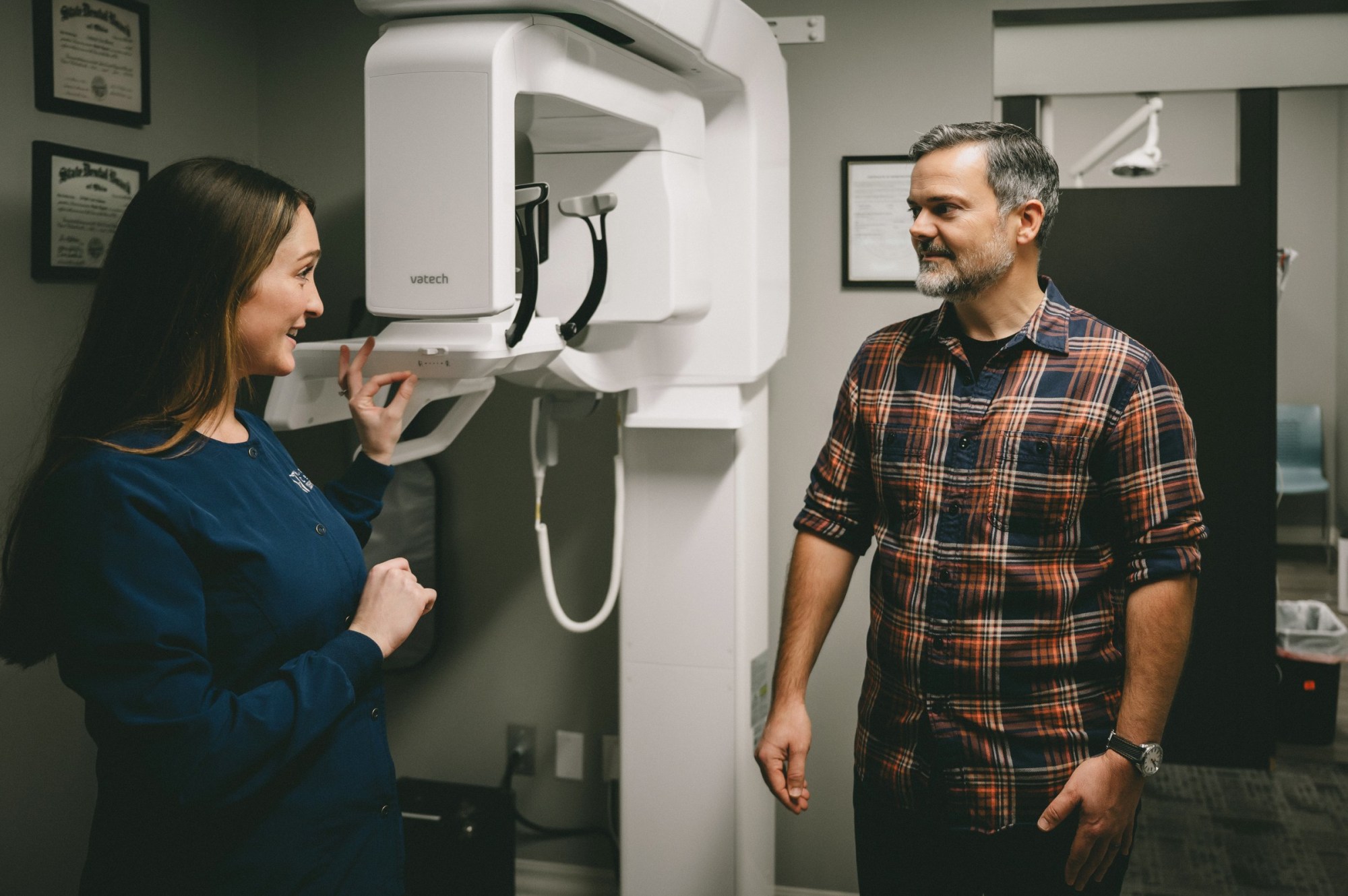
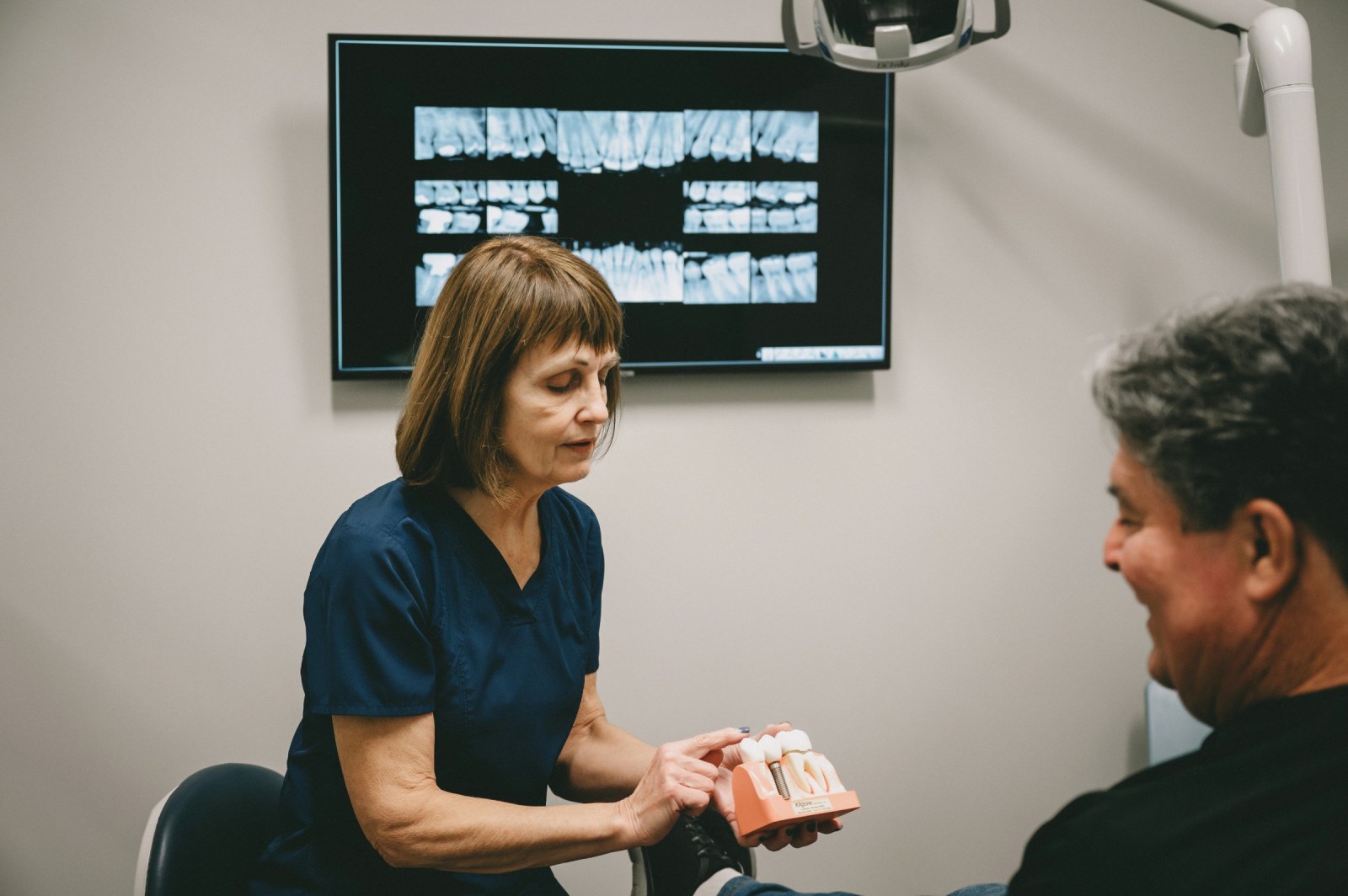
We check the tops of your teeth for wear, look at how your upper and lower teeth come together, and feel for tenderness in your jaw muscles and joint. Digital x-rays and a small camera let you see exactly what we see.
For most patients, that means a custom occlusal guard, a night guard shaped to your bite that absorbs the grinding force so your teeth don't have to. If grinding has already cracked or worn down teeth, we'll talk through rebuilding them with fillings or crowns, and we handle that work right here in the office.
We take impressions so the lab can build a guard shaped to your mouth, not a one-size-fits-all tray from the drugstore. When it comes back, you stop in so we can check the fit and make any small adjustments.
You're likely a good candidate if any of this sounds familiar:
Some situations call for a different starting point. If you have untreated gum disease or decay, we take care of that first. If your grinding seems tied to breathing or sleep issues, we'll talk about getting that evaluated. And if your bite is noticeably off, correcting the alignment may be part of the plan alongside a guard.
Ready to get started? Call us at (614) 864-2466 or request a visit with Dr. Pappas, Dr. Colles, or Dr. Kevin Lydic at our Groveport office. We'll be in touch soon.
Plan to bring your photo ID, your insurance card if you have one, and your completed patient forms. It also helps to make a note of when your symptoms are worst, how long they have been going on, and any medications or sleep issues involved. If a partner has heard the grinding, include roughly how often.
Once the guard is yours, caring for it is pretty simple:
What you pay depends on the appliance your dentist recommends and what your plan covers. Ohio dental plans vary quite a bit when it comes to grinding care. Some cover a portion of a custom night guard, some handle it differently based on how the claim is submitted, and a few treat it as elective. Our front office checks your benefits before treatment starts so you know what to expect before anything is scheduled.
If grinding has already damaged a tooth, repairs like fillings and crowns are typically filed under restorative care rather than preventive, which can affect your out-of-pocket cost. We accept many dental insurance plans and offer financing through CareCredit for anything not covered. In most cases, taking care of the grinding now costs quite a bit less than repairing the damage later.

At Walnut Creek Dental East, we treat grinding, jaw joint strain, worn enamel, and morning headaches as one connected picture, not a handful of separate problems. Here is what that means for you.
We are open six days most weeks, including the first and third Saturdays of the month, so finding a time that works for your schedule is rarely a problem.
They're related but not the same thing. Bruxism is the habit of grinding or clenching your teeth. TMJ disorder refers to trouble with the jaw joint itself (the hinge just in front of your ear). Grinding puts steady strain on that joint and can lead to TMJ symptoms over time, but you can have one without the other.
It's better than nothing in a pinch, but a boil-and-bite guard from the drugstore tends to be bulky and won't match your bite. A poor fit can shift how your teeth come together over time. A custom guard is thinner, shaped to your mouth, and much more likely to stay in all night.
Yes. Most grinding happens during sleep, so it's common to feel fine until an exam turns up flattened edges, hairline cracks, or thinning enamel. That's a good reason to keep up with regular checkups.
It often helps, especially the morning headaches that fade as the day goes on. Headaches have many causes, though, and if yours continue after your jaw muscles have had time to rest, we'll be upfront about that and help you figure out the next step.
Yes, and it makes addressing the grinding sooner rather than later a smart move. The same force that wears down natural enamel puts stress on crowns, veneers, and fillings too, shortening how long they last.
No. Just tell us what you've been noticing and we'll take it from there. New patients are always welcome at Walnut Creek Dental in Groveport.
Grinding won't go away on its own. One visit is all it takes to get a careful look and honest answers about what we find and what it would cost to fix. Depending on what we see, that might mean a night guard, repairing worn teeth with crowns, or both.
Call Walnut Creek Dental East in Groveport at (614) 864-2466 and we'll get you scheduled. Dr. Pappas and our team will meet you right where you are.
Call 614-864-2466 or request an appointment online to set up your first visit. We’ll be in touch soon.